
Food Contact Materials in the EU: Regulation and Safety
Food contact materials (FCMs) include all materials that come into direct contact with food during production, processing, packaging, storage, and consumption. These materials include packaging, containers, kitchen utensils, and food-processing equipment.
FCMs contain thousands of chemical substances that may migrate into food under certain conditions. Factors such as temperature, duration of contact, and the type of food can influence migration levels. For example, fatty or acidic foods and heating processes may increase the release of certain chemicals.
Scientific evidence shows that migration from food contact materials contributes to human exposure to potentially harmful substances, including endocrine disruptors, carcinogens, and reproductive toxicants such as bisphenols, phthalates, and PFAS. Additionally, most regulatory risk assessments evaluate chemicals individually, which may underestimate the effects of combined exposure to chemical mixtures.
EU Regulatory Framework for Food Contact Materials
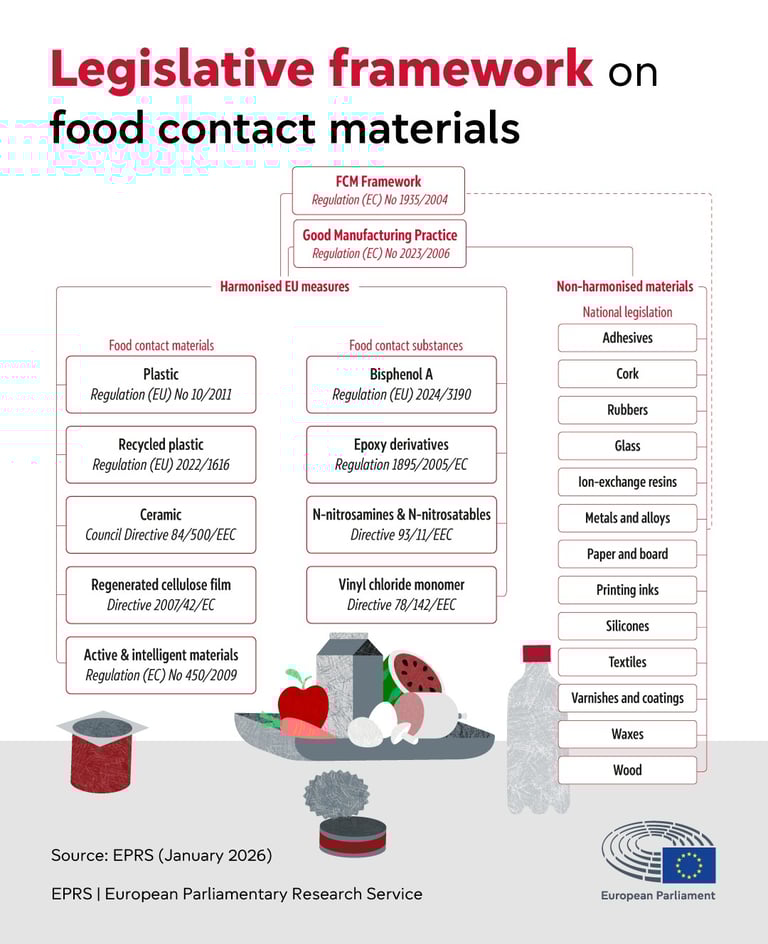
Food contact materials in the European Union are regulated primarily under Regulation (EC) No 1935/2004, which establishes general safety requirements. According to this regulation, materials must not transfer substances to food in quantities that could endanger human health, change the composition of food, or alter its taste and smell.
In addition, Regulation (EC) No 2023/2006 on Good Manufacturing Practice (GMP) requires manufacturers to ensure that FCMs are produced consistently and under controlled conditions.
However, only a limited number of materials are harmonised at EU level. Specific EU rules currently exist for plastics, ceramics, regenerated cellulose film, and active and intelligent materials. Many other materials—such as paper and cardboard, printing inks, rubber, and coatings—are regulated mainly at national level, leading to regulatory fragmentation.
Another challenge concerns non-intentionally added substances (NIAS), such as impurities or degradation products formed during manufacturing. These substances are not always fully addressed under existing legislation.
Regulation (EU) No 10/2011 on Plastic Food Contact Materials
Plastics are the most comprehensively regulated food contact materials in the EU. Commission Regulation (EU) No 10/2011 establishes specific rules for plastic materials and articles intended to come into contact with food.
A key element of this regulation is the Union list of authorised substances, which specifies the monomers, additives, and other substances permitted in the manufacture of plastic food contact materials. Only substances included in this list may be used, unless specific exemptions apply.
Migration Limits and Testing
To assess migration safely and consistently, laboratories use food simulants instead of actual food products. These substances mimic the chemical behaviour of different food categories during testing.
Common food simulants include:
Simulant A – ethanol solution representing aqueous foods
Simulant B – acetic acid solution representing acidic foods
Simulant C – ethanol representing alcoholic foods
Simulant D1 – ethanol representing fatty foods
Simulant D2 – vegetable oil representing fatty foods
Simulant E – representing dry foods
Migration testing conditions simulate realistic or worst-case scenarios for food contact. Typical test conditions may include:
10 days at 40 °C for long-term storage at room temperature
2 hours at 70 °C for hot-fill conditions
30 minutes at 100 °C for high-temperature contact
These tests ensure that materials remain compliant under their intended conditions of use.
Future Challenges
Despite existing legislation, several challenges remain. Many chemicals used in food contact materials are still insufficiently studied, and the assessment of non-intentionally added substances remains complex. In addition, regulatory fragmentation across materials and limited consideration of chemical mixtures highlight the need for further improvements in EU legislation.
The European Commission is currently considering revisions to the framework to strengthen consumer protection, harmonise standards across materials, and address emerging scientific concerns.
Our mission
We're on a mission to change the way the housing market works. Rather than offering one service or another, we want to combine as many and make our clients' lives easy and carefree. Our goal is to match our clients with the perfect properties that fit their tastes, needs, and budgets.
Our vision
We want to live in a world where people can buy homes that match their needs rather than having to find a compromise and settle on the second-best option. That's why we take a lot of time and care in getting to know our clients from the moment they reach out to us and ask for our help.


Our team
Our strength lies in our individuality. Set up by Esther Bryce, the team strives to bring in the best talent in various fields, from architecture to interior design and sales.


Esther Bryce
Founder / Interior designer


Lianne Wilson
Broker


Jaden Smith
Architect


Jessica Kim
Photographer
Contact
Contact me for collaborations
details
roser.fabres@gmail.com
+34 688 91 19 95
© 2026. All rights reserved.